My Mind Forgets What My Body Knows
There is a story in my body that yoga saved my life. Not in a dramatic, overnight way. Not in the way we sometimes imagine transformation happens, with one big moment that changes everything all at once. It was quieter than that. More like a steady return. A practice that taught me, again and again, that I could be with myself. That I could breathe. That I could feel. That I could soften. That I could listen. That I could come back into relationship with a body I had spent years pushing through.
Yoga gave me a place to meet myself without needing to perform, explain, fix, or improve anything. It gave me a way to be in conversation with my body when my mind wanted to run the whole show. And over time, that became life-giving.
Befriending my body has been one of the most useful acts of my life.
Not because it solved everything. Not because it made me permanently calm or perfectly regulated or always available to the present moment. But because it keeps giving back.
Every time I return to the mat, to the breath, to the felt sense of being here, something in me remembers what my thinking mind often forgets. I remember that I am not only a mind with a long list of tasks. I am not only a person responsible for helping, creating, producing, responding, caring, and carrying. I am also a body. A breathing body. A sensing body. A body that knows things before my mind has words. A body that needs rhythm, movement, rest, space, contact with the earth, and moments where nothing is being asked of me except presence.
And still, my mind forgets. This is the part that always humbles me. Even after all these years of practice, even after knowing how much yoga has supported me, even after feeling the difference in my own nervous system again and again, my mind can still forget.
It forgets how much I love it. It forgets how alive I feel afterward. It forgets that the thing I am avoiding is often the very thing that would help me return. I can know, deeply, that yoga brings me back to myself. I can know that breath changes my relationship to the day. I can know that movement helps metabolize what the mind keeps circling. I can know that stillness gives my body a chance to speak. And still, I can resist it.
I can stay at the computer. I can answer one more message. I can write one more thing. I can organize, plan, produce, help, create, and keep going. The mind has many elegant ways of staying in motion. It can even use meaningful work as its excuse.
This is where the nervous system work becomes so honest.
Because sometimes what keeps us from yoga, rest, stillness, breath, or any practice that brings us back to life is not laziness. It is not always lack of discipline. It is not simply that we do not know better. Sometimes it is adrenaline. Sometimes it is cortisol. Sometimes it is the body’s old loyalty to momentum. Sometimes it is the hijacked mind trying to protect us by keeping us in motion.
The keep-going engine can become addictive. And for those of us who are helpers, leaders, practitioners, parents, caregivers, creators, and high-responsibility humans, this can be especially subtle. Because the work may be good work. The writing may be meaningful. The helping may be sincere. The planning may be necessary. The producing may serve something we truly care about. But even meaningful work can become fused with an old survival strategy: keep moving, keep proving, keep earning safety, keep being useful, keep staying ahead of the feeling, keep managing the environment so nothing falls apart.
There is a particular kind of trance that happens when productivity becomes the nervous system’s preferred state. It can feel focused. It can feel important. It can even feel satisfying. But underneath, there may be a low-grade urgency driving the whole thing. The body gets recruited into the pace of the mind. The breath becomes shallow. The shoulders rise. The jaw tightens. The belly braces. The eyes narrow toward the screen. The day becomes a series of outputs. And slowly, the body becomes something we drag along behind us instead of something we are in relationship with.
I know this pattern intimately. I know the feeling of being carried by the current of doing. I know the seduction of “just one more thing.” I know how easily the mind can convince itself that motion equals safety. And I also know the quiet grief of realizing I have spent hours, days, or seasons away from the very practices that make me feel most alive.
That is why I no longer think of returning to the body as a simple matter of motivation. It is more tender than that. Returning to the body often asks us to interrupt an old agreement. An agreement to override. An agreement to push. An agreement to keep going no matter what. An agreement to treat the body as a vehicle for productivity rather than a living source of wisdom.
And sometimes, when we pause, we begin to feel what all that motion has been protecting us from. This is why slowing down can feel uncomfortable at first. Stillness is not always immediately peaceful. The body may have sensations we have not been listening to. The breath may reveal how tightly we have been holding. Rest may bring up emotion. A quiet moment may expose the exhaustion that productivity was covering.
So we reach for the familiar. We check the phone. We answer the email. We make another plan. We choose the next task over the practice that would actually help us come home. Not because we are failing. But because the nervous system often chooses what is familiar before it chooses what is nourishing.
This is such an important distinction. The body does not always move toward what is good for us simply because we know it is good for us. The body often moves toward what feels known. If urgency has been familiar, urgency can feel like home. If over-responsibility has been familiar, over-responsibility can feel like identity. If productivity has been familiar, productivity can feel like worth. If helping has been familiar, helping can feel like safety. And if stillness has not always felt safe, then the practices that bring us closer to ourselves may also bring us closer to the places we have learned to avoid.

This is where compassion matters.
We do not need to shame ourselves back into practice.
We do not need to turn yoga into another measure of discipline or worthiness. We do not need to make rest another task we are failing at. The invitation is softer. Can I notice? Can I tell the truth? Can I recognize the keep-going engine without becoming harsh with myself? Can I remember that avoidance may be a signal, not a character flaw? Can I return in a way that is small enough for my nervous system to trust?
Sometimes the way back is not a full class. Sometimes it is three conscious breaths. Sometimes it is stepping outside and feeling the air on the skin. Sometimes it is putting one hand on the belly and one hand on the heart. Sometimes it is lying on the floor for five minutes and letting the ground hold the weight we have been carrying alone. Sometimes it is rolling out the mat without requiring anything impressive to happen there.
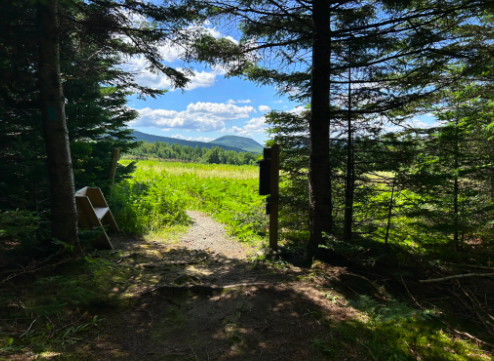
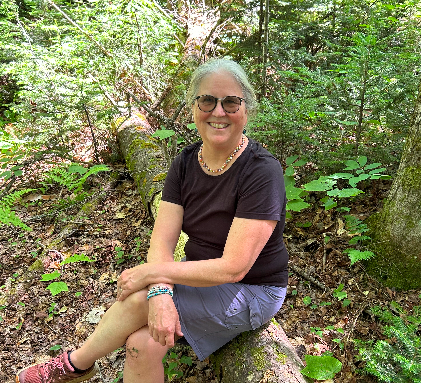
And sometimes, beautifully, July comes. The light changes. The air softens. The body begins to imagine something different. Yoga outside becomes possible again. There is something about practicing under the open sky that helps me remember more quickly. The earth beneath me. The breeze moving across my skin. The sounds of birds, leaves, neighbors, life. The reminder that the body belongs to the natural world, not only to calendars and screens and responsibilities.
Outside, practice feels less like something I am trying to accomplish and more like something I am allowed to receive. The mat becomes a place of contact. The breath becomes a bridge. The body remembers itself as part of something larger. And I remember again: this is not another task. This is aliveness. This is not a performance. This is relationship. This is not self-improvement. This is a way of coming back into the truth of being here.
Yoga keeps teaching me that the body does not need to be conquered into calm. It needs to be listened to. It needs to be included. It needs opportunities to complete what has been interrupted, soften what has been braced, and feel what has been waiting beneath all the motion.
The mind may forget. Mine certainly does. It forgets because it is busy protecting, planning, solving, scanning, and trying to keep me safe in the ways it learned long ago. But the body remembers. The body remembers breath. The body remembers rhythm. The body remembers the relief of being met without judgment. The body remembers that presence is possible. The body remembers that aliveness is not something we have to earn.
And each time I return, I am reminded that practice is not about becoming someone better. It is about becoming more available to the life that is already here. More available to the breath. More available to sensation. More available to joy. More available to grief. More available to the quiet intelligence that lives beneath the noise of the mind.
So this June, I am listening again. Not perfectly. Not as a project. Not with the pressure of consistency as another achievement. But with reverence for the way the body keeps calling us home.
Maybe the question is not, “Why am I avoiding what helps me?” Maybe the question is, “What part of me still believes I am safer in motion?” And maybe the practice begins there. With honesty. With compassion. With one breath. With one return.
With the humble recognition that the mind may forget what the body knows, but the body is patient. It keeps waiting for us. It keeps offering the way back. It keeps reminding us that we are not machines built only for output. We are living bodies. We are rhythmic, sensing, breathing beings.
And sometimes the most generous thing we can do is stop treating return as another task and let it become what it has always been: a way back to aliveness.
Jennifer Degen
July 3, 2026
Categories
Select Category...
- Alberto Villoldo
- Ancestral Superfoods
- Art
- Attunement
- Autumn wellness retreat
- Body
- Boundaries
- Breathwork
- Buddhist Tradition
- Burnout
- Chanting
- Community
- Community Engagement
- Contentment
- Costa Rica
- Costa Rica Retreat
- Creative Expression
- Creativity
- Crystal Healing
- Daily
- Deep Rest
- Diet
- Digestive Health
- Embodied Living
- Family & Wellness
- Festival Reflections
- Financial security
- Food
- Gratitude
- Grief Transformation
- Grounding
- Guided Meditation
- Habit Patterns
- Hakomi therapy
- Hatha
- Healing
- Health
- Health Wellness
- Healthy Diet
- Heated Yoga
- Holiday Event
- Hypnosis
- Hypnotherapy
- Intelligence
- Intention
- Intuition
- Judgement
- Kathleen Burns Kingsbury
- Kundalini
- Kundalini Yoga
Featured Blogs